

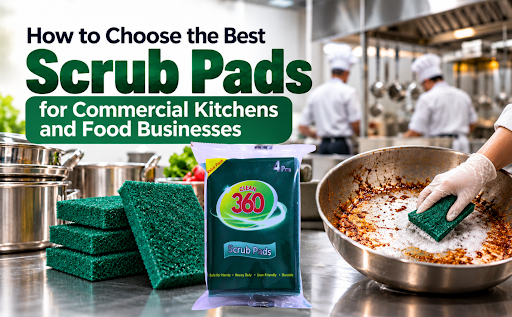
When it comes to a commercial kitchen, cleaning must happen round the clock. There are greasy pans to scrub, food residue stuck to cookware, worktops to wipe down and utensils to clean. In a busy kitchen the last thing the staff needs is a scrub pad that doesn’t perform.
Choosing the right scrub pad involves more than just finding something abrasive enough. You need a pad that works on the surface used, handle the demands of regular use and fit into the kitchen’s hygiene routine.
For restaurants, hotels, catering businesses and food service establishments, the right cleaning supplies can make everyday maintenance more manageable. Here’s what to look for when choosing scrub pads for your commercial kitchen.
1. Start by Identifying Your Cleaning Needs
Not every kitchen cleaning task requires the same type of scrub pad. A pan with baked-on food residue needs a different approach from a delicate utensil or a stainless-steel pot that requires gentle cleaning.
Before buying scrub pads in bulk, identify the surfaces and equipment that your kitchen staff clean regularly.
Typical applications include:
- Removing grease and food residue from cookware
- Cleaning utensils, pots and pans
- Scrubbing suitable kitchen work surfaces
- Removing stubborn stains from appropriate hard surfaces
- Carrying out routine cleaning of kitchen equipment.
Matching the scrub pad to the task helps staff clean effectively without unnecessarily damaging the surface.
2. Understand the Different Types of Scrub Pads
One of the most important buying decisions is selecting the right type of scrub pad for the job. Excel Tissues manufacture regular kitchen scrub pads, heavy-duty scrub pads, non-scratch pads (nylon based) and multipurpose cleaning pads. They address different cleaning requirements rather than treating every surface the same way.
Regular kitchen scrub pads
These are useful for everyday cleaning tasks that involve suitable utensils and kitchen surfaces. They are a practical option for routine washing where moderate scrubbing is sufficient.
Heavy-duty scrub pads
Commercial kitchens often deal with stubborn grease and dried food deposits. This is where heavy-duty pads come to play. However, they should only be used on surfaces that can tolerate their abrasive action.
Non-scratch scrub pads
Some cookware, utensils and kitchen surfaces require gentler treatment and non-scratch pads are the answer. Always check the manufacturer’s guidance and the surface’s care instructions before use.
Multipurpose scrub pads
These are suitable for everyday cleaning tasks and staff must assign them appropriately, one each for different jobs.
3. Choose the Right Level of Abrasiveness
A scrub pad needs enough abrasive action to loosen dirt, but more abrasive does not automatically mean better cleaning.
A commercial kitchen will have stainless-steel cookware, non-stick pans, glassware, coated equipments and more. Each of them have different cleaning requirements and a single kind of scrub pad may not work for all. Before selecting a product, check its intended applications and perform a test on a small, inconspicuous area before use. Excel Tissues produces nylon-based scrub pads that are gentle on the hands and utensils.
You may also need to train your kitchen staff to distinguish between cleaning tasks to reduce the likelihood of accidental damage.
4. Look for Durability and Ease of Use
In a busy restaurant or hotel kitchen, cleaning tools that are used throughout the day may lose structure, become difficult to grip or stop cleaning effectively. This can interrupt the workflow.
Excel Tissues ensures that durability and cleaning performance are important features of the scrub pad range. The durability of our scrubber is more than that of any available in the market.
5. Hygiene Matters as Much as Cleaning Performance
A scrub pad may remove visible dirt, but that does not mean it is automatically hygienic after use.
Food residue, moisture and grease can accumulate in cleaning pads. If a pad is repeatedly used without appropriate cleaning, drying or replacement, it can become a source of contamination rather than helping maintain cleanliness.
Commercial kitchens should therefore establish clear procedures for handling cleaning tools. We have listed a few:
- Separate pads for different cleaning tasks and areas
- Pads used on dirty equipment must not be used to clean food-contact surfaces
- Clean and store reusable pads according to the manufacturer’s instructions
- Allow pads to dry appropriately between uses
- Replace pads when they become worn, damaged, persistently dirty or difficult to clean.
6. Consider the Cost of Regular Replacement
For a small café, buying scrub pads may seem like a minor expense. But for a hotel kitchen, catering operation or restaurant chain, the cost can add up. This does not mean choosing the cheapest available option is the best decision.
A pad that is unsuitable for the task may require more effort, produce disappointing results or need replacing sooner. Conversely, buying a heavy-duty pad for every application may be unnecessary.
Evaluate the cost in relation to the pad’s intended use, durability and cleaning performance. It is also helpful to estimate how many pads your kitchen uses over a typical week or month. This gives purchasing teams a more realistic idea of stock requirements and helps prevent last-minute shortages. Excel Tissues’ 4-in-1 Scrub pads are both heavy duty and economical and is an excellent option if you plan to buy scrub pads in bulk.
7. Check the Supplier's Product Range
Finding a dependable supplier is an important part of maintaining consistent cleaning standards.
A Scrub pad Manufacturer or supplier should be able to explain the available options and help you identify products suitable for your cleaning requirements. Clear product information is particularly useful when a business needs different pads for cookware, work surfaces and tougher cleaning jobs.
Excel Tissues supplies cleaning products under the name ‘Clean 360’, which includes scrub pads and wipes. We have options for routine kitchen cleaning, heavy-duty applications, non-scratch cleaning and multipurpose use.
For restaurants, hotels and catering businesses, this variety can help simplify the process of sourcing suitable cleaning products. A heavy-duty scrubber from Excel Tissues comes in a 4”X 6” size, which means that you have a larger surface area for cleaning making the task simpler and easy.
Before placing a bulk order, ask about product specifications, recommended applications, pack sizes and availability. If your kitchen uses specialized cookware or equipment, clarify surface compatibility before making a final decision.
8. Don't Overlook Responsible Product Choices
Commercial kitchens must consider how their cleaning supplies are used and discarded. It is vital to buy the right number of pads, follow the recommended replacement schedule and avoid unnecessary wastage. You must also ask suppliers for specific information about a product’s materials, disposal requirements and any verified environmental claims.
Excel Tissues’ eco-friendly scrub pads and environmentally conscious manufacturing encourages businesses to operate responsibly.
If you are looking for a Scrub pad Manufacturer or supplier, explore the available options carefully rather than choosing solely on price. Excel Tissues offers a range of scrub pads designed for different cleaning needs. This gives commercial buyers a starting point for identifying products that suit their kitchens. A well-chosen scrub pad, combined with sound cleaning practices, can help keep your kitchen ready for the next service.